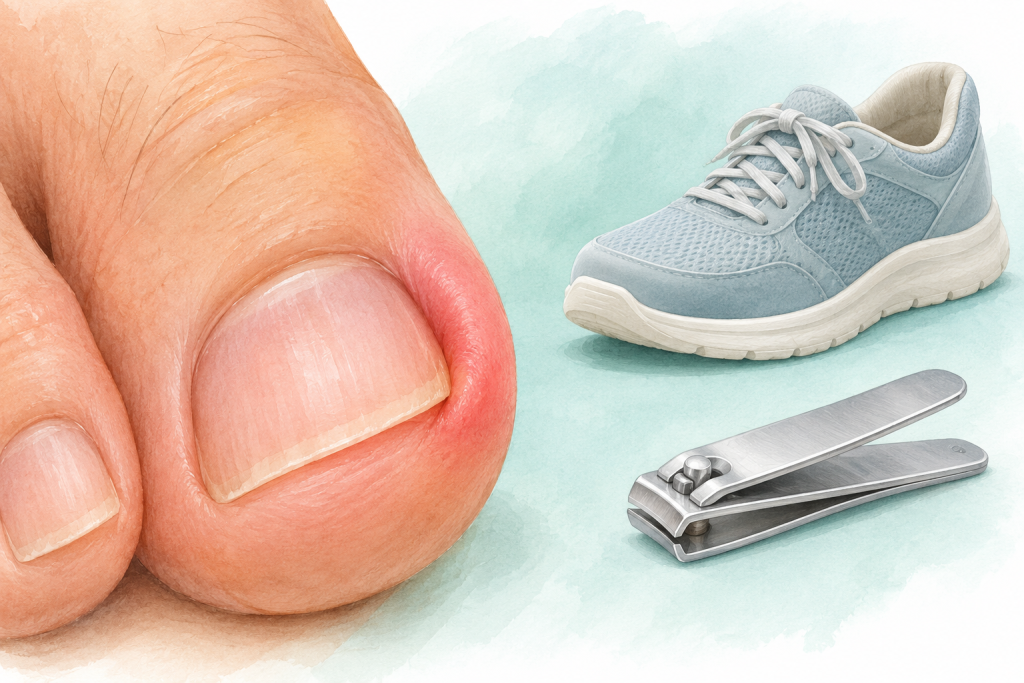
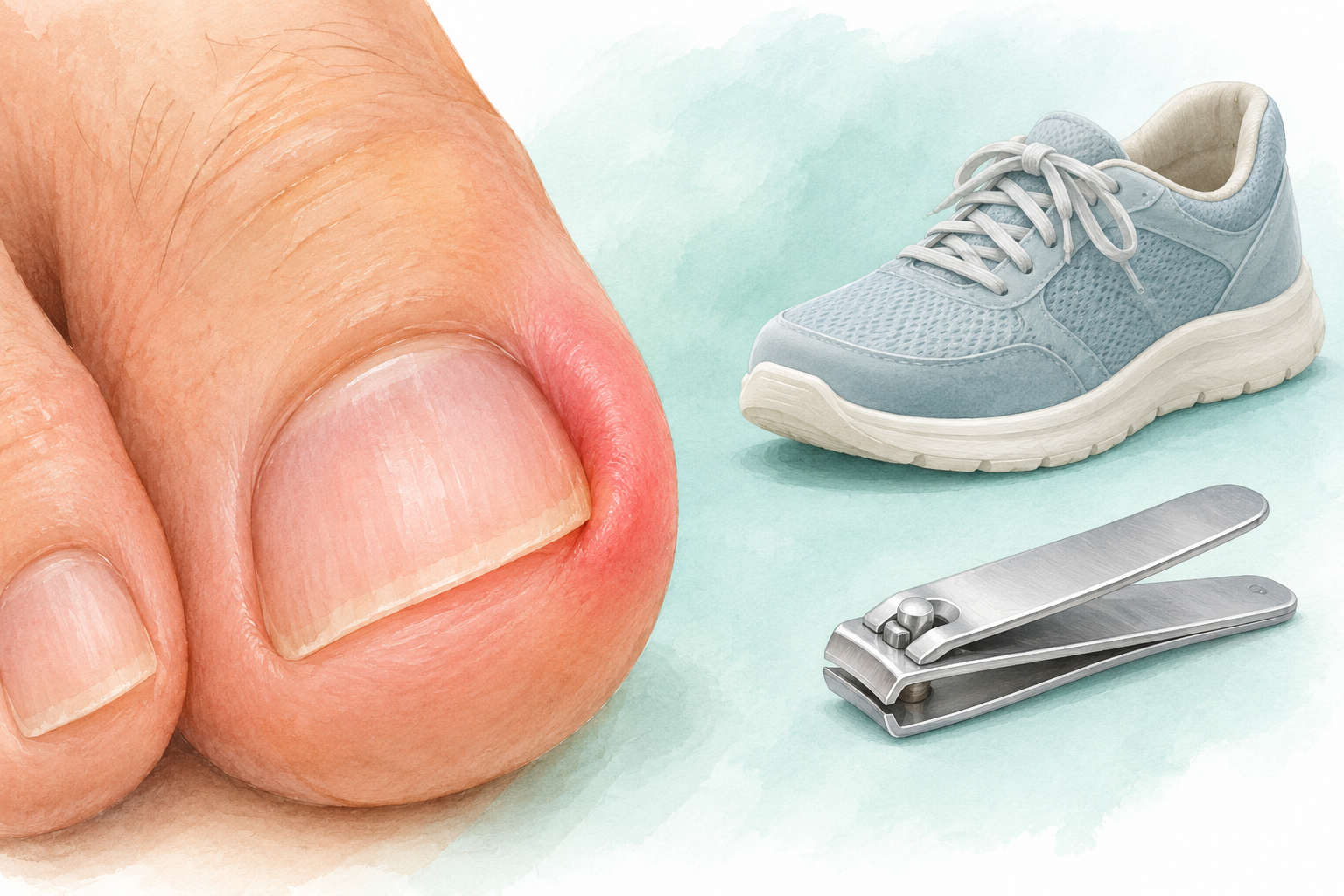
A small nail corner can make shoes and walking uncomfortable. Cutting it away may give brief relief, only for the same pain to return. When the edge of a toenail presses into or penetrates the surrounding skin, an ingrown toenail, also called onychocryptosis, may be the cause. Antibiotics or removal of the entire nail are not automatically the answer. Treatment starts by identifying the cause and severity.
What happens, and what causes it?
The big toe is commonly affected. A nail edge irritates the adjacent skin, producing inflammation; infection may develop secondarily. Redness alone therefore does not prove that bacteria are the main problem. An ingrown toenail itself is not contagious.
Deep cutting down the sides, tearing away nail corners, tight shoes, repeated pressure during sport and a curved nail shape can contribute. A thickened or distorted nail also deserves assessment. Closed winter footwear in Afghanistan may aggravate an existing pressure problem, but the sources reviewed did not establish a reliable national prevalence figure.
Risk factors and symptoms
Tell your doctor about excessive foot sweating, repeated injury and previous episodes. Diabetes, reduced sensation, poor circulation and immune suppression make wounds and infection more concerning. People with these conditions should not dig out a nail corner at home.
A mild case may cause tenderness, limited redness, slight swelling and pain when a shoe presses on the toe. Continuing irritation can lead to drainage, pus or a red tissue overgrowth that bleeds easily. This may be granulation tissue, but its identity cannot be confirmed from a photograph alone.
Diagnosis and conditions that can look similar
A clinician usually starts by examining the nail edge and surrounding skin and asking about trimming, footwear, injury, medicines and symptom duration. In a person at higher risk, sensation and circulation also need assessment. Routine tests are not necessary for every case. A fungal sample or further investigation may be appropriate when there is suspicious nail thickening, an unusual wound, possible deep infection or failure to heal.
Important differences
Paronychia means inflammation of the nail fold and may occur with or without an ingrown nail. Fungal nail infection can cause discolouration, thickening or crumbling; appearance alone is not a sound reason to start oral antifungal medicine. Trauma with blood under the nail, a markedly curved nail and other growths can also cause pain. A persistent one-sided wound, unusual lump or unexplained bleeding needs assessment rather than repeated treatment under an assumed diagnosis.
For the related nail-fold condition, see our Dari article on paronychia and pus beside the nail.
Practical care for a mild case
If there is no pus, spreading redness or high-risk health condition, reduce pressure first. Choose roomy footwear and temporarily reduce activities that repeatedly compress the toe. A short soak in comfortably warm water may ease discomfort; dry the foot well afterwards. Avoid hot water, especially if sensation is reduced. Ask a doctor or pharmacist which pain medicine is suitable for you.
Do not cut into the painful corner, dig beneath it with scissors or a needle, or squeeze pus. Cutting a V into the middle of the nail does not remove the pressure at its side. Corn-removal acids, caustic substances and unidentified creams can injure damaged skin. Techniques involving cotton or tape beneath a nail should follow professional assessment and instruction; do not force material under a painful edge.
Evidence-based treatment options
Non-surgical approaches
Selected cases can be managed with pressure relief, taping, a small protective gutter beside the nail or nail bracing. The choice depends on nail shape, inflammation and the ability to maintain care and attend follow-up. Pain relief and growth of the nail edge take different amounts of time. Immediate resolution or permanent freedom from recurrence cannot be promised.
When a procedure may help
Persistent pain, repeated episodes, tissue overgrowth or unsuccessful conservative care may justify removing only the troublesome narrow strip under local anaesthetic. Sometimes the corresponding part of the nail-producing root, the matrix, is treated with a chemical such as phenol or a surgical method to reduce regrowth. The nail may remain permanently narrower. Removal of the entire nail is not required for every patient.
A 2023 systematic review of randomised trials found that adding phenol to nail removal may reduce recurrence compared with removal alone, but the certainty for that comparison was very low. Small studies, different procedures and inconsistent definitions of recurrence limit confidence in declaring one technique best for everyone. Before treatment, discuss bleeding, infection, prolonged drainage, nail-shape changes and possible recurrence. [3]
Are antibiotics necessary?
Not for every red nail fold. The mechanical pressure still needs attention. A randomised trial in otherwise healthy people with local infection did not show a clear healing-time benefit from adding oral antibiotics to matrixectomy. People with poor circulation, immune compromise or more extensive cellulitis were excluded, so the result does not apply to every patient. A clinician may prescribe antibiotics for spreading cellulitis, fever or higher-risk circumstances. Do not start them yourself. [4,5]
Before and after a procedure
Bring your medicine list and mention allergies, diabetes, bleeding history and possible pregnancy. Do not stop blood-thinning medicine without advice. Ask which procedure is planned, whether the nail will become narrower, how dressings should be changed and when you can return to work.
Afterwards, follow the specific cleaning and dressing instructions you receive. Avoid swimming, shoe pressure and impact sport until the wound has healed sufficiently and the clinician advises it is safe. Healing can take several weeks and varies between patients and procedures. An expected recovery timetable should be discussed individually rather than promised in advance.
When to seek care promptly
Pus, increasing pain, spreading redness or failure to improve with simple care warrants examination. Fever, chills, a red streak extending up the foot or feeling generally unwell should be assessed the same day. With diabetes, reduced sensation or poor circulation, seek advice early even for a small toe problem. A cold or blackening toe, or unusually severe pain, needs urgent assessment.
Frequently asked questions
How should I trim nails to prevent another episode?
Once the inflammation settles, cut straight across without cutting too short or digging deeply into the corners. If the nail is hard or you cannot see or reach your foot safely, obtain professional help.
Is an ingrown toenail the same as fungus?
No. The main issue is mechanical pressure from the nail edge. A fungal infection may coexist and needs its own assessment.
Can it come back after the nail is removed?
Yes. The procedure, subsequent nail growth and footwear pressure matter. Treating part of the matrix aims to reduce recurrence, not guarantee it cannot happen.
Is laser always the best option?
No. Availability does not establish superiority for every patient. Severity, the clinician’s expertise, cost and evidence for the proposed method should be considered together.
What to do next
Rather than repeatedly cutting away the corner, reduce pressure and establish the cause. If the problem keeps returning, arrange a dermatology consultation to discuss appropriate conservative care or a procedure. This educational draft is prepared for the doctor’s approval and does not replace an individual examination or prescription.
References / منابع / سرچینې
- NHS: Ingrown toenail — reviewed 30 June 2025
- DermNet: Ingrown toenail
- Exley et al., 2023: systematic review, recurrence and evidence certainty
- Reyzelman et al., 2000: randomized trial of adjunctive antibiotics
- Bos et al., 2007: randomized trial of surgery and local antibiotics
- Alberta Health: Ingrown toenail care — 4 December 2024
- American Podiatric Medical Association: Ingrown toenails
- Healthdirect Australia: Ingrown toenails